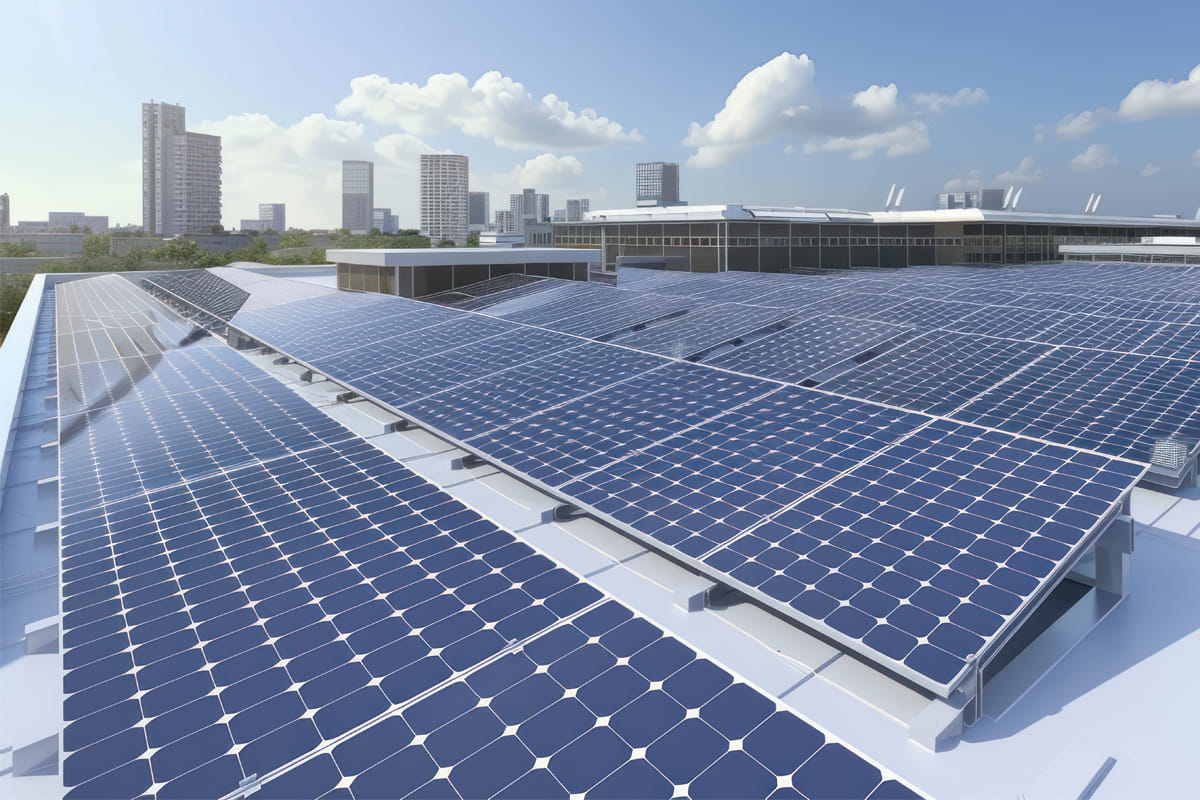
Commercial Solar vs. Traditional Power: Cost Comparison
Running a business already means watching every recurring expense closely, and electricity is one of those costs that never really takes a month off. When owners compare commercial solar with traditional utility power, the real question is not simply which option looks cheaper today, but which one gives the business more control, more predictability, and more value over time. Traditional power often wins the short glance because there is no large equipment purchase sitting in front of you, yet that first impression can hide years of rising utility bills and very little long-term return. Commercial solar, by contrast, usually asks for more planning at the beginning, but it can turn a permanent operating expense into an asset that starts working for the company month after month.
That is why a smart cost comparison has to go beyond the monthly bill and look at total financial impact over the life of the system. A business using traditional grid power is exposed to utility rate increases, fuel-cost volatility, and tariff structures it does not control, while a business with solar can offset a meaningful share of that exposure with self-generated electricity. Recent federal energy data has shown that commercial electricity rates rose notably from 2024 to 2025, which is exactly the kind of trend that makes commercial solar look less like a trendy upgrade and more like a serious cost-management strategy. For many companies, that kind of increase is enough to start rethinking how much sense it makes to rely entirely on the grid.
Why This Comparison Matters More Than Ever
A few years ago, some business owners could reasonably treat electricity as a background expense that rose slowly enough to absorb without much strategy. That mindset is harder to justify now, because rate pressure, operating uncertainty, and tighter margins have pushed energy into the foreground of business planning. When utility costs climb, every extra cent per kilowatt-hour affects overhead, pricing, and profitability, especially for facilities with large daytime demand such as warehouses, offices, retail centers, schools, manufacturers, and service businesses. Commercial solar matters in this environment because it gives companies a way to stabilize part of their energy spend instead of simply reacting to whatever the next bill says.
The comparison also matters because traditional power is not really a neutral option. Choosing to stay fully dependent on the grid is still a financial decision, and it is one that often means continuing to rent power forever without building equity in the energy side of the business. Solar changes that equation by putting production on-site and allowing the business to capture value from the roof, parking area, or available land it already controls. Once owners start looking at electricity as something they can partially produce rather than only purchase, the cost conversation becomes much more favorable to commercial solar.
Traditional Power Looks Simple, but the Long-Term Costs Add Up
Traditional utility power is attractive because the model is familiar, and familiarity often feels low-risk even when it is expensive over time. There is no system to install, no project timeline to manage, and no capital equipment showing up on the balance sheet at the start, which makes grid power look easy from a short-term budgeting standpoint. The problem is that convenience does not equal cost efficiency, because every month the business keeps paying for power at rates set by others, and those rates can rise due to fuel markets, infrastructure costs, regulation, and broader utility spending. In other words, traditional power is simple to maintain operationally, but it can be financially passive in exactly the wrong way.
Another issue with traditional power is that its cost structure is open-ended. Utility bills are not just about energy consumed, since many commercial customers also face demand charges, seasonal rate structures, and time-based pricing that can make budgeting more difficult than expected. Even if a company becomes more efficient internally, it still remains tied to a pricing system it does not own and cannot meaningfully lock in for the long haul. That lack of control is one reason traditional power often ends up costing more than it first appears when owners compare five-, ten-, or twenty-year horizons instead of a single billing cycle.
Commercial Solar Changes the Cost Structure
Commercial solar works differently because the cost profile is front-loaded rather than endlessly recurring. Instead of paying only for delivered electricity every month with no ownership outcome, the business invests in equipment that produces energy on-site for years, which can reduce purchased electricity and improve long-term planning. Solar still involves installation, engineering, permitting, and interconnection costs, and those project costs should always be weighed carefully. Even so, once the system is in place, the company is no longer buying every kilowatt-hour at full retail from the grid during the periods when the solar array is generating.
This shift matters because solar has no fuel cost, which is one of its strongest financial advantages over traditional generation. Conventional electricity pricing is influenced in part by fuel markets, and natural gas prices have shown clear volatility in recent years, which can place upward pressure on power costs. Solar generation does not carry that same fuel-price exposure, so its cost is far more stable once the system is installed. That makes commercial solar especially compelling for companies that want protection from the kind of volatility that can quietly eat into margins.
What Does the Upfront Cost Really Mean?
The main objection business owners raise is usually the upfront price, and that concern is fair because solar is not free equipment. A purchased commercial system requires capital, financing, or another ownership structure, which means the business must think beyond the next quarter and evaluate returns over the life of the asset. Yet the upfront cost should be viewed in context, because traditional power also costs money immediately, only in a form that never stops and rarely builds long-term value. When owners frame solar as an investment instead of a simple purchase, the comparison becomes much clearer.
Federal incentives also change the picture in a major way. Current federal tax policy allows qualifying clean electricity investment projects to claim significant credits when the project meets the relevant requirements, and in many cases businesses may also benefit from accelerated depreciation treatment. Taken together, those provisions can materially reduce effective project cost for eligible businesses, which is one reason solar often compares much more favorably to traditional power than a simple sticker-price review would suggest. Once incentives are added into the equation, the real cost gap can look very different from what many owners first imagine.
Can Solar Be Cheaper Without Buying the System Outright?
Yes, and this is where many companies realize they have more options than they expected. Some businesses assume the only way to benefit from solar is to buy the system themselves, but third-party arrangements can lower the barrier to entry significantly. Solar power purchase agreements and similar structures can sometimes involve little to no upfront capital cost, provide more predictable energy pricing, and shift certain system performance and operating responsibilities away from the host customer. For companies that want savings and stability without making a large capital purchase, that can be a very attractive path.
This matters in a traditional power comparison because it removes one of the grid’s biggest perceived advantages. If a business can adopt solar with limited or no upfront capital under the right structure, then the old argument that utility power is better because it requires no major investment starts to lose force. Instead, the business may be able to secure a more predictable electricity rate while avoiding much of the volatility associated with conventional purchased power. In practical terms, that means commercial solar can outperform traditional power not only for buyers with large cash reserves, but also for companies that value liquidity and operating flexibility.

Operating Costs Tell the Bigger Story
The deeper cost advantage of commercial solar shows up after installation, when the system begins reducing dependence on retail electricity purchases. Traditional power remains a pure operating expense, which means every year starts with another full cycle of utility bills and another exposure to changing rate structures. Solar, on the other hand, typically lowers the amount of energy the business must buy from the grid during production hours, and over a long enough period that can translate into substantial cumulative savings. That is why long-term cost comparisons are much more revealing than short-term bill comparisons.
Solar also tends to offer a cleaner operating-cost profile because it does not rely on ongoing fuel purchases. Maintenance is still part of ownership, and no honest comparison should pretend otherwise, but maintenance is not the same as paying a utility for every unit of electricity consumed forever. Traditional power keeps the business exposed to recurring external price movements, while solar shifts more of the economics into a controlled asset with known production characteristics. That difference is why solar often becomes more attractive the longer an owner plans to stay in the property or continue operating the business.
What About Payback and Return on Investment?
Payback is where many owners want the discussion to end, but it should really be the start of a broader analysis. In simple terms, payback measures how long it takes savings and related project value to recover the original investment, which makes it useful as a quick reference point, though not a complete decision-making tool. A better commercial decision also considers tax treatment, financing structure, avoided utility inflation, system life, and the value of long-term price stability. In other words, a project can be smart even when the conversation requires more than one easy number.
That said, solar tends to improve as the analysis becomes more realistic rather than less. If utility rates rise over time, and recent data shows that commercial rates have in fact moved upward, then the avoided cost of grid electricity becomes more valuable with each passing year. Traditional power offers no comparable mechanism for creating upside, because it is still just purchased consumption. Solar may require commitment at the front end, but once it is producing, it gives the business a chance to keep more of what it would otherwise send out the door to the utility.
Which Option Gives Your Business More Control?
Control is an underrated part of cost comparison because owners often focus on the bill amount without thinking about who gets to influence it. With traditional power, the business pays what the utility tariff structure and market environment produce, and while efficiency upgrades can help, the company still remains fundamentally dependent on outside pricing. Commercial solar introduces a measure of self-reliance by allowing the business to generate part of its own electricity, reduce exposure to future rate increases, and build a more predictable energy model. That control can be especially valuable for companies managing multiple locations, tight operating budgets, or energy-intensive daytime operations.
There is also a strategic benefit that goes beyond pure billing math. A company that invests in solar is not only addressing utility costs, but also strengthening budgeting accuracy and signaling that it is thinking ahead rather than reacting after costs increase. In many cases, that is good business even before brand and sustainability benefits enter the conversation. When cost, stability, incentives, and long-term planning are viewed together, commercial solar usually comes out ahead of traditional power for businesses that are serious about controlling overhead instead of merely enduring it.
Turn Energy Spending Into a Smarter Business Asset
If the goal is simply to avoid change today, traditional power will always feel easier. If the goal is to compare real costs over time, however, commercial solar usually presents the stronger business case because it can reduce dependence on rising utility rates, improve predictability, create tax advantages for eligible projects, and turn a recurring expense into a productive asset. The numbers do not have to promise magic to make the point, since current utility trends and incentive structures already show why many businesses are rethinking how they power their operations. For companies looking beyond the next billing cycle, commercial solar often stands out as the smarter financial move.
93Energy helps businesses look past surface-level utility comparisons and evaluate what commercial solar can really do for the bottom line. A strong solar strategy is not about selling a trend, but about designing an energy solution that fits the building, the load profile, the financial goals, and the growth plan of the company behind it. When that work is done well, commercial solar is not just cheaper-looking on paper, it is genuinely better positioned to deliver long-term value than traditional power.