Solar for Warehouses and Distribution Centers in Illinois
93Energy designs, permits, and builds commercial solar for warehouse and logistics facilities across Illinois and the Midwest.
Get in Touch

Put Your Warehouse Roof to Work
Warehouses and distribution centers across Illinois carry heavy electric loads: high-bay lighting, HVAC, dock doors, conveyors, and forklift charging, often across two or three shifts. They also tend to have what a solar array needs most, a large, flat, unshaded roof. 93Energy designs and installs solar energy systems for warehouses that turn that roof into a long-term energy asset, with measured production data to support your ESG and sustainability reporting.
Headquartered in Evanston, Illinois, 93Energy has built commercial solar for Midwest facilities since December 2018 and is an Illinois Shines Approved Vendor, qualified to submit projects to the state's solar renewable energy credit program. As a commercial solar EPC (engineering, procurement, and construction) contractor, our team handles design, permitting, construction, and utility coordination, so you have one point of accountability from the first site visit to permission to operate.
Solar for Illinois Distribution Hubs
Joliet, Elgin, and Waukegan sit along some of the busiest freight corridors in the Midwest. Facilities on I-55, I-80, I-90, and I-94 run long hours, with much of that demand falling during daylight, when a rooftop array produces at its peak.
We build commercial solar in Joliet for I-55 and I-80 distribution and cold storage operators, and commercial solar in Elgin for the city's warehouse and industrial base. Most of these properties sit in ComEd territory, so we plan our northern Illinois commercial solar projects around current ComEd interconnection and net metering rules. In Peoria and much of central and southern Illinois, we work with Ameren Illinois.
Why Solar Makes Sense for Warehouses
Lower Energy Costs for Lighting and HVAC
Lighting, heating, cooling, and ventilation account for much of a typical warehouse electric bill. Solar power for warehouse operations offsets electricity you would otherwise buy from the utility, especially during daytime shifts, when the array is producing at its peak.
Roof Space That Matches the Load
Big-box buildings offer wide, flat, largely unobstructed roofs, which is why solar panels for warehouse roofs work so well. The open surface keeps layouts simple, limits roof penetrations, and leaves us room to size the system to your facility's interval data.
You Own the Power Plant on Your Roof
A behind-the-meter system puts the power plant on your own roof. The electricity it produces serves your facility first, and the array becomes a long-lived energy asset that stays with the property.
ESG and Supply Chain Reporting
When retailers and manufacturers ask about energy use and emissions across their supply chain, onsite solar gives you measured production data for your ESG and sustainability reporting.
Room to Add Storage and EV Charging
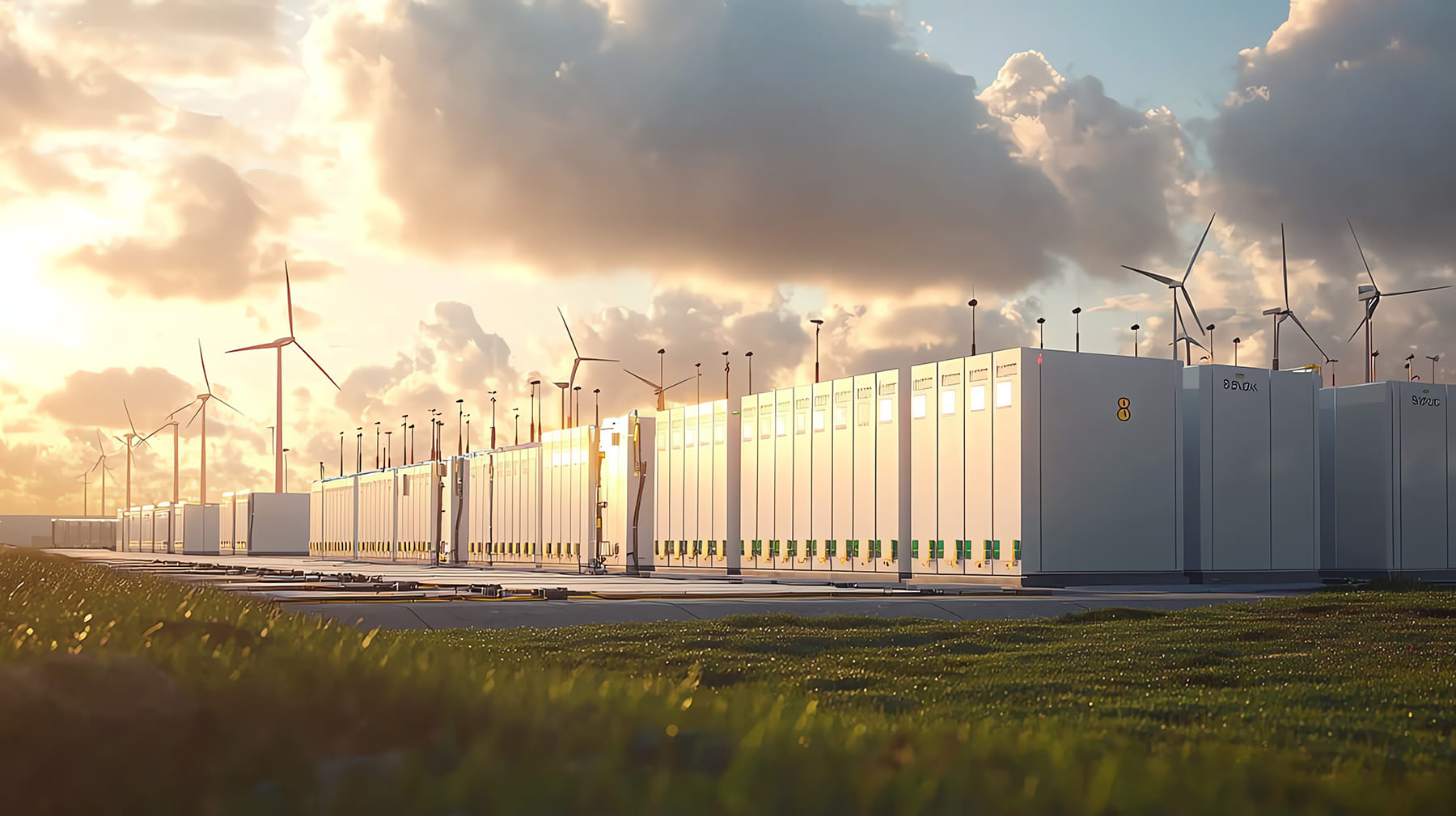
A grid-tied solar array shuts off during a utility outage for safety. Pairing it with battery storage can support critical loads during an outage and help manage demand charges, depending on system design. For sites planning fleet or yard vehicle charging, we can design commercial EV charging into the same project.
More Predictable Energy Budgets
Every kilowatt-hour your array produces is one you do not buy from the utility at future rates, which makes long-term operating budgets easier to plan for facilities that run year-round.
Room to Add Storage and EV Charging
Battery storage holds the power your array produces while the sun is out, so your facility can keep drawing on solar energy after dark and through cloudy or rainy stretches. The system discharges when your operation needs power most, or when the grid does, which can help manage demand charges, depending on system design. Some battery systems can also earn revenue through utility grid programs. For sites planning fleet or yard vehicle charging, we can design commercial EV charging into the same solar and storage project.
Request a Solar Energy Analysis for Your Warehouse
Send us twelve months of interval data or utility bills for your warehouse. We will review your usage, your roof space, and the incentives available to your facility.
Incentives and ROI for Warehouse Solar
Incentives shape the payback on a warehouse array as much as the energy it produces, and they belong in any commercial solar ROI calculation from the start.
Federal Investment Tax Credit
The federal Investment Tax Credit (ITC) under Section 48E can cover up to 30% of eligible project costs. Whether your project reaches that level depends on whether it satisfies applicable rules, including prevailing wage and apprenticeship requirements. Timing matters now: projects that did not begin construction by July 4, 2026 must be placed in service by December 31, 2027 to qualify. We plan your project schedule around that deadline. 93Energy does not replace your tax advisor.
Illinois Shines Renewable Energy Credits
Through Illinois Shines, Illinois utilities purchase the renewable energy credits (RECs) a qualifying system produces. As an Illinois Shines Approved Vendor, 93Energy prepares and submits your application once the system design is confirmed. REC value depends on system size, program category, and the program rules in effect when you apply.
Accelerated Depreciation
Businesses that own their system may be able to depreciate it on an accelerated schedule. Eligibility and timing depend on your tax position and the rules in effect when the system is placed in service, so confirm the treatment with your tax advisor.
ComEd Distributed Generation Rebate
Eligible non-residential systems in ComEd territory may qualify for a distributed generation rebate. Program terms change, so we confirm current availability during design project development.

Our EPC Approach for Warehouse Projects
Site and Structural Review
We review roof age, structural capacity, attachment or ballast limits, drainage, and electrical service before recommending a layout. If an older roof needs reinforcement or replacement planning, we flag it before design moves forward.
In-House Engineering and Design
Our engineers model the system against your interval data and confirm the final design with you before any application is filed.
Permits and Applications
With the design confirmed, we file the permit, Illinois Shines, and utility interconnection applications, each carrying the final system size and array count.
Turnkey Installation
Our union electricians install the system, with roof access, crane lifts, and electrical cutovers planned around your shifts and trailer schedule.
Interconnection and Permission to Operate
We coordinate utility inspection and interconnection through permission to operate (PTO), then commission the system so it is producing for your facility. After energization, our O&M services, including software monitoring, annual inspections, and thermal imaging, help protect production over the life of the system.
Related Industries
Cold Storage
Refrigerated warehouses run compressors around the clock, so we plan solar and storage for cold storage facilities around overnight load as well as daytime production.
Manufacturing
Production lines and process equipment create steady daytime loads, which is the demand profile solar for manufacturing facilities is built to offset.
Retail
Stores and shopping centers run long hours with heavy lighting and HVAC loads, so solar for retail properties follows the same roof-and-load logic as a distribution center.

Solar Panel Installation for Warehouses Across Illinois
Since December 2018, 93Energy has served Illinois businesses from Evanston as an Illinois Shines Approved Vendor, a union contractor, and a single EPC team for engineering, permitting, construction, and utility coordination. Contact 93Energy to schedule a site review of your warehouse and get a clear picture of your roof, your usage, and the incentives available to your facility.
Get an Estimate for Your Warehouse Solar Project
Tell us about your warehouse, and the 93Energy team will review your roof, usage, and incentive options, then follow up with an estimate built around your operating schedule.